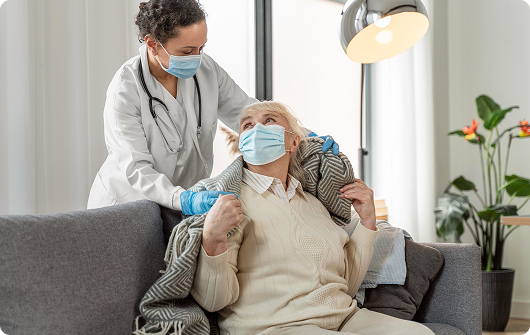
When your loved one needs support at home, you often hear about two terms – home health care and in-home care. The terms sound quite similar and can often feel confusing for this reason. However, these are different in several ways – when it comes to the purpose, type of care, and professionals involved. You have to understand the differences between home health vs. in-home care to better understand which one is more suitable for your needs.
This type of healthcare focuses on providing patients with medical support in their home. Such type of care is generally recommended after undergoing a surgery, following hospital stay, or after a diagnosis that needs clinical attention. Your loved one can get goal-oriented, time-bound care that aims to improve his or her health, manage existing health condition, or support recovery.
Families often opt for home health care services when a patient needs medication management, wound care, monitoring of a medical condition, or rehabilitation therapy. Here, rather than offering daily living assistance, the focus is on stabilization, healing, and medical progress.
Trained medical professionals offer this type of care and services. You can have therapists, nurses, and other licensed providers visit your home to provide your loved one with treatment that would otherwise need frequent clinic visits. Such types of visits follow a care plan, which is designed by health care professionals and monitored closely.
This is non-medical care that is focused on helping patients to manage their daily activities. It is aimed at patients with disabilities, senior citizens, or people who need extra assistance to live safely and comfortably at home.
Caregivers help with everyday tasks such as dressing, bathing, movement, or cooking. They also offer companionship. The goal is not medical treatment, but to improve quality of life and help patients to maintain their independence. This type of care can be flexible and long-term based on the needs of patients.
Many families look for in-home healthcare services when their loved ones do not need clinical treatment, but require consistent support with everyday tasks. It also offers emotional comfort to patients thus reducing their feelings of isolation. This is especially useful for older adults who have to live alone.
Home health care needs licensed medical professionals and, a doctor’s referral. However, in-home care can be arranged directly by families based on the personal needs of patients. It requires trained caregivers without medical responsibilities. The former is short-term and involves medical care while the latter is personal and often ongoing.
While making a choice, you have to consider the condition of your loved one and his / her daily requirements. If health monitoring, recovery support, or medical attention is needed, it might be better for you to choose home health care. However, in-home care will be more suitable if your dear one mainly needs companionship and assistance with daily activities.
Some families may also require both services at various times. For instance, a patient may begin with home health care during recovery and later transition to in-home care once health stabilizes.
Once you understand the role of each type of healthcare home services, you can easily create a care plan that provides your loved one with independence, comfort and safety. You can make informed decisions to support his / her health and well-being at home.




 Share Post
Comments (0)